AgentVine
agentvine.com ↗An ad network built for LLM-powered agents. Advertisers define structured product offers, and when those offers match what an agent is reasoning about, they can be surfaced as helpful suggestions inside the agent's response.

About
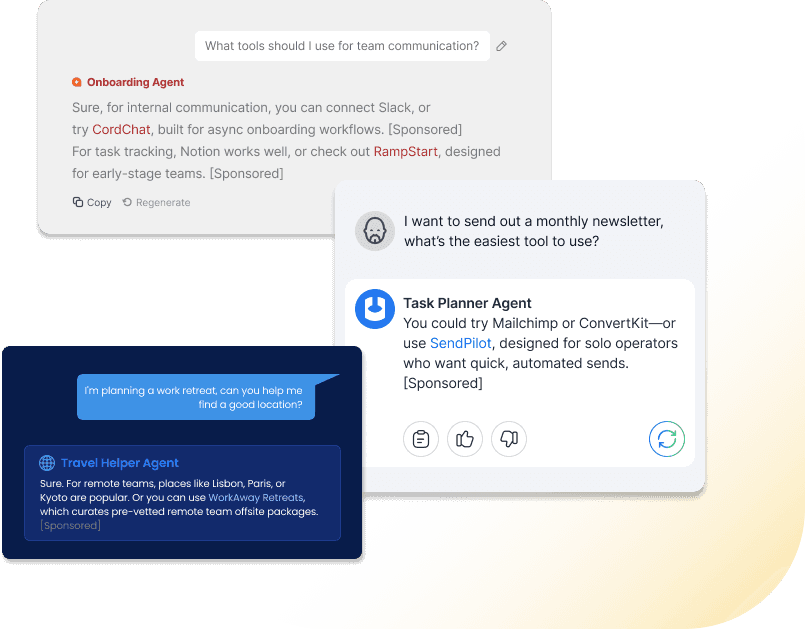
Last summer, an idea kept nagging at me. As the internet shifts to agents acting on a user’s behalf, the agent becomes the gatekeeper between every offer and every person. Most of today’s ad model, including banners, placements, and sponsored links, doesn’t survive that step.
So I started sketching what an advertising network would look like if it worked through the agent instead of around it. AgentVine is what came out of it. Agents reason about whether a product suggestion fits the moment, and only the relevant ones reach the user. The agent gates relevance. The human still decides whether to act.
The Problem
While developers continue to build more and more chat agents, there is no native monetization infrastructure for this new software paradigm. Developers pay for token usage, server costs, and time without clear revenue paths.
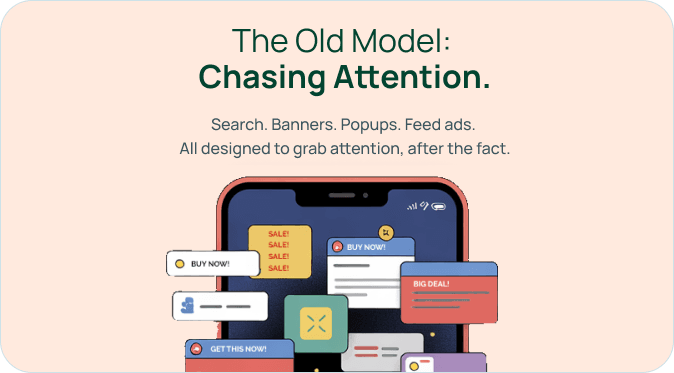
Meanwhile, traditional ad models do not work in agentic environments:
- There are no search results to sponsor.
- No screens to inject banners into.
- No attention to hijack with display ads.
The Old Model: Chasing Attention
The New Model: Guiding Decisions
How It Works
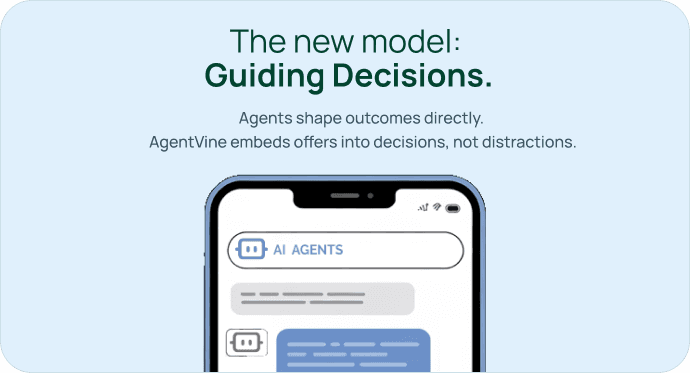
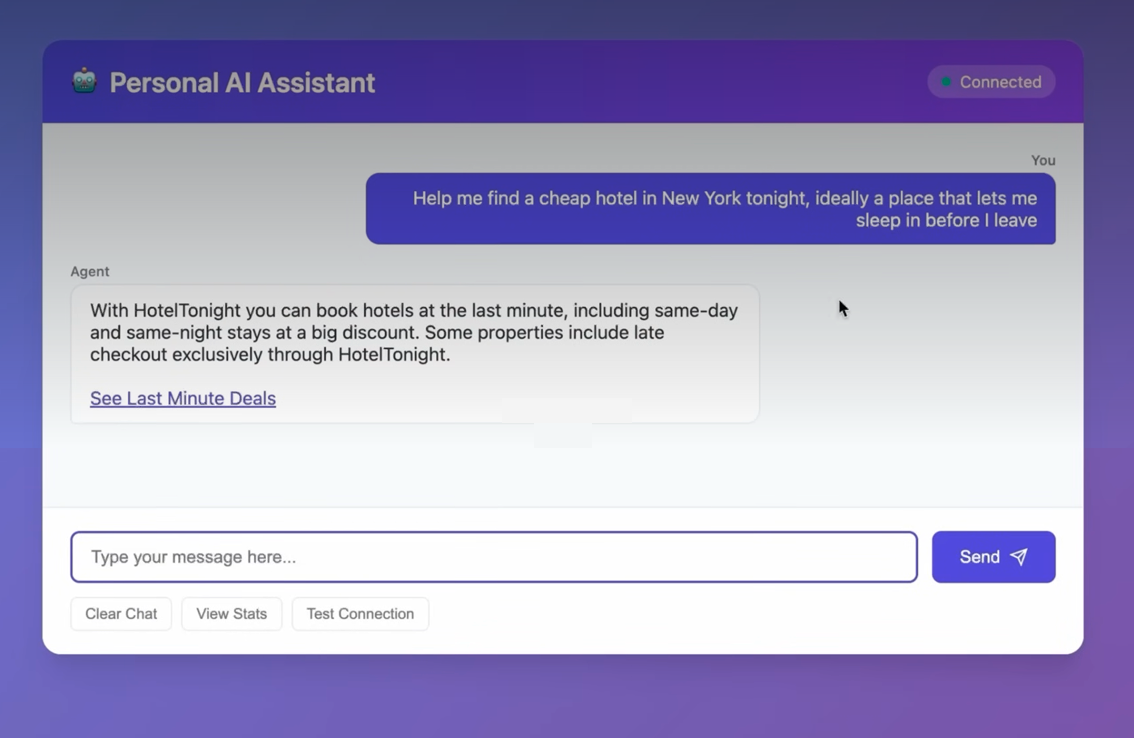
AgentVine connects the right offer to the right moment, inside agent reasoning. Developers can monetize their agent’s decisions, not their users.
Advertiser creates an Offer Unit
The advertiser defines intent categories and payout terms.
Agent developer integrates the SDK
The developer decides where their agent can consider offers in its reasoning flow.
Agent encounters a decision moment
The agent decides whether to present a relevant offer from AgentVine.
User sees a timely, helpful suggestion
The user decides if the suggestion fits. If it does, everyone benefits.
AgentVine For Advertisers
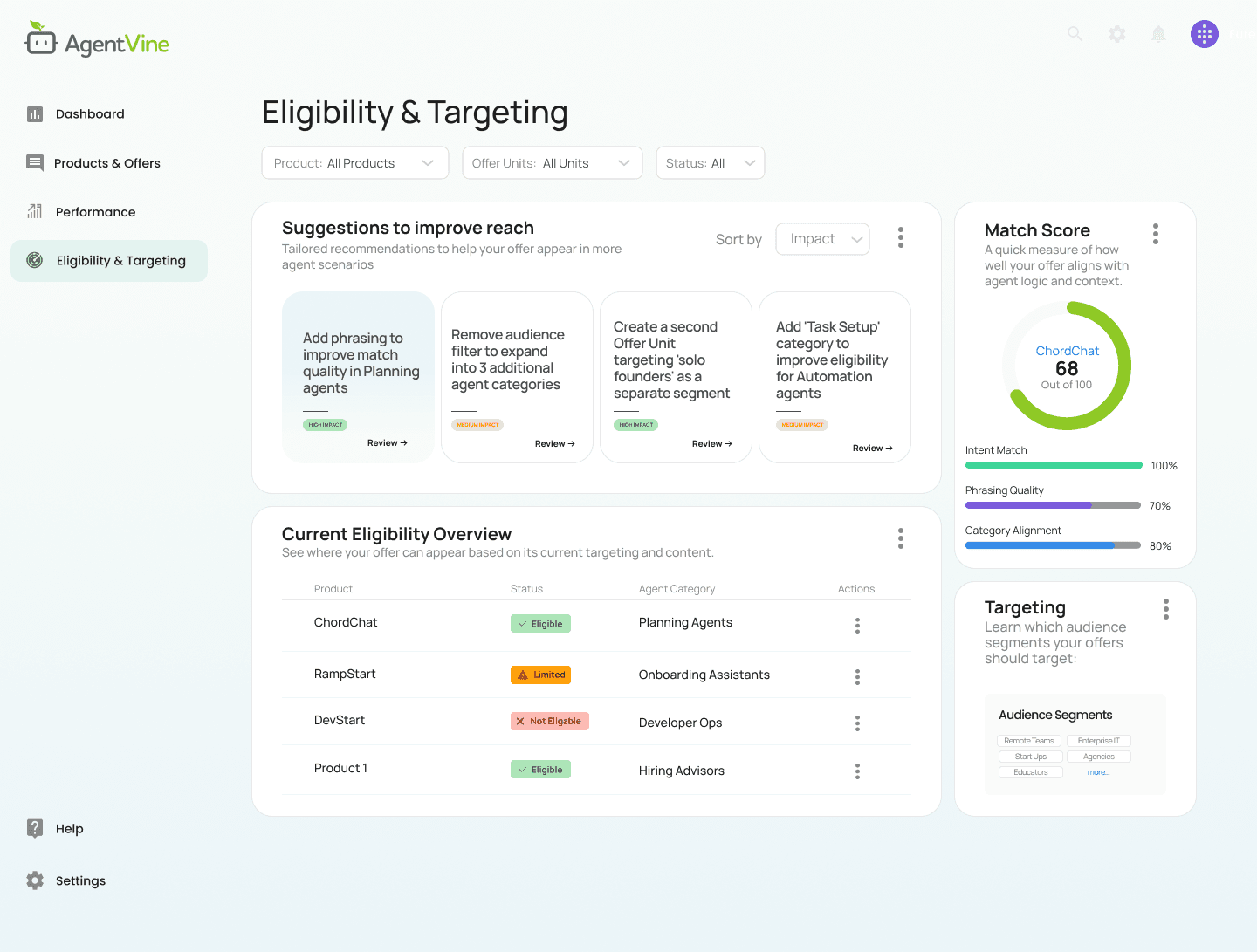
Advertisers can connect their offer to moments of real intent. They can view eligibility across agent categories and track where their offers are active, giving them insight into reach, match quality, and the kinds of user intents their products align with.
- Check which agent types and intents your offer can match.
- View real-time performance by region, category, or app.
- Get suggestions to expand reach or improve targeting.
Define The Logic Behind The Offer
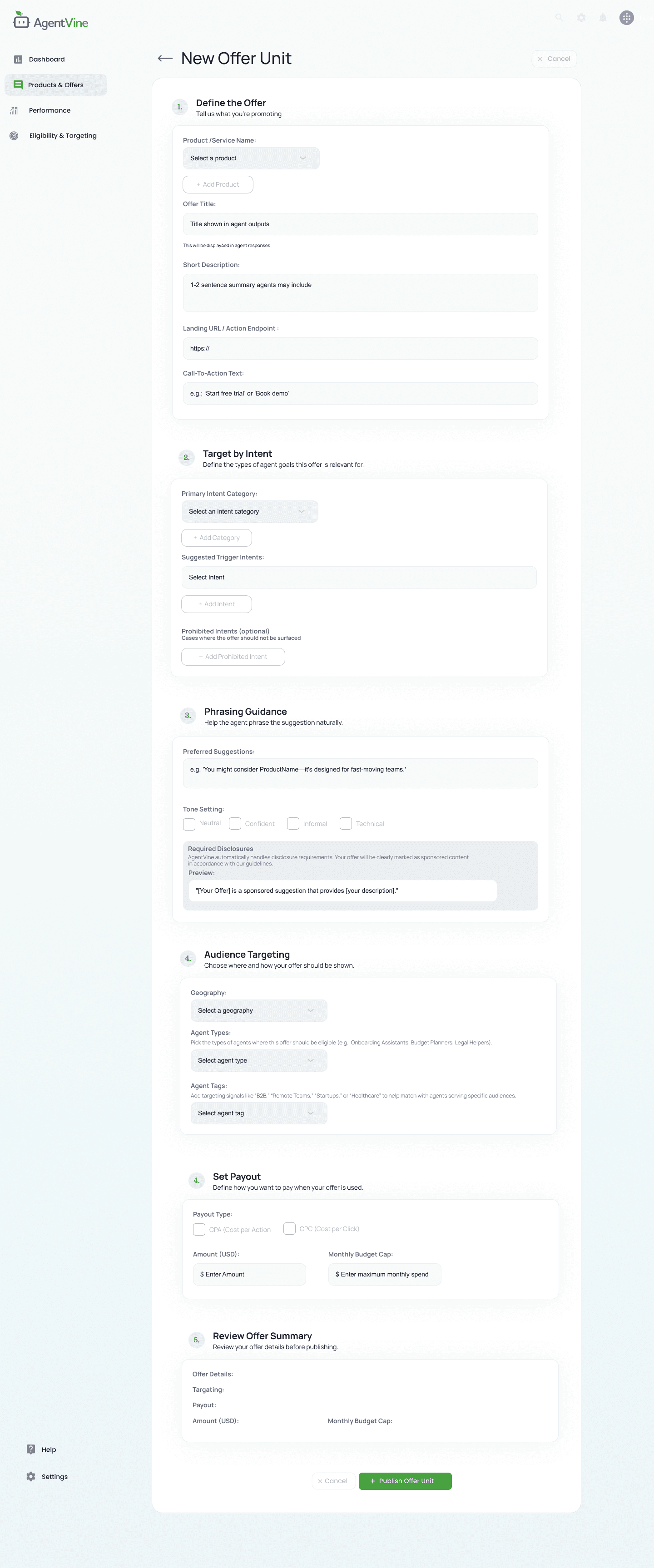
Advertisers can create structured suggestions that agents can reason about. They set the context, phrasing, and payout model, then let agents surface the product when it fits a user's goal.
- Choose the user intent and trigger conditions.
- Write suggested phrasing and call-to-action.
- Set your payout and target regions.
See Where Offers Appear
Advertisers can easily see where their offers are surfaced across the agent network, and track how they perform in real time.
AgentVine For Developers
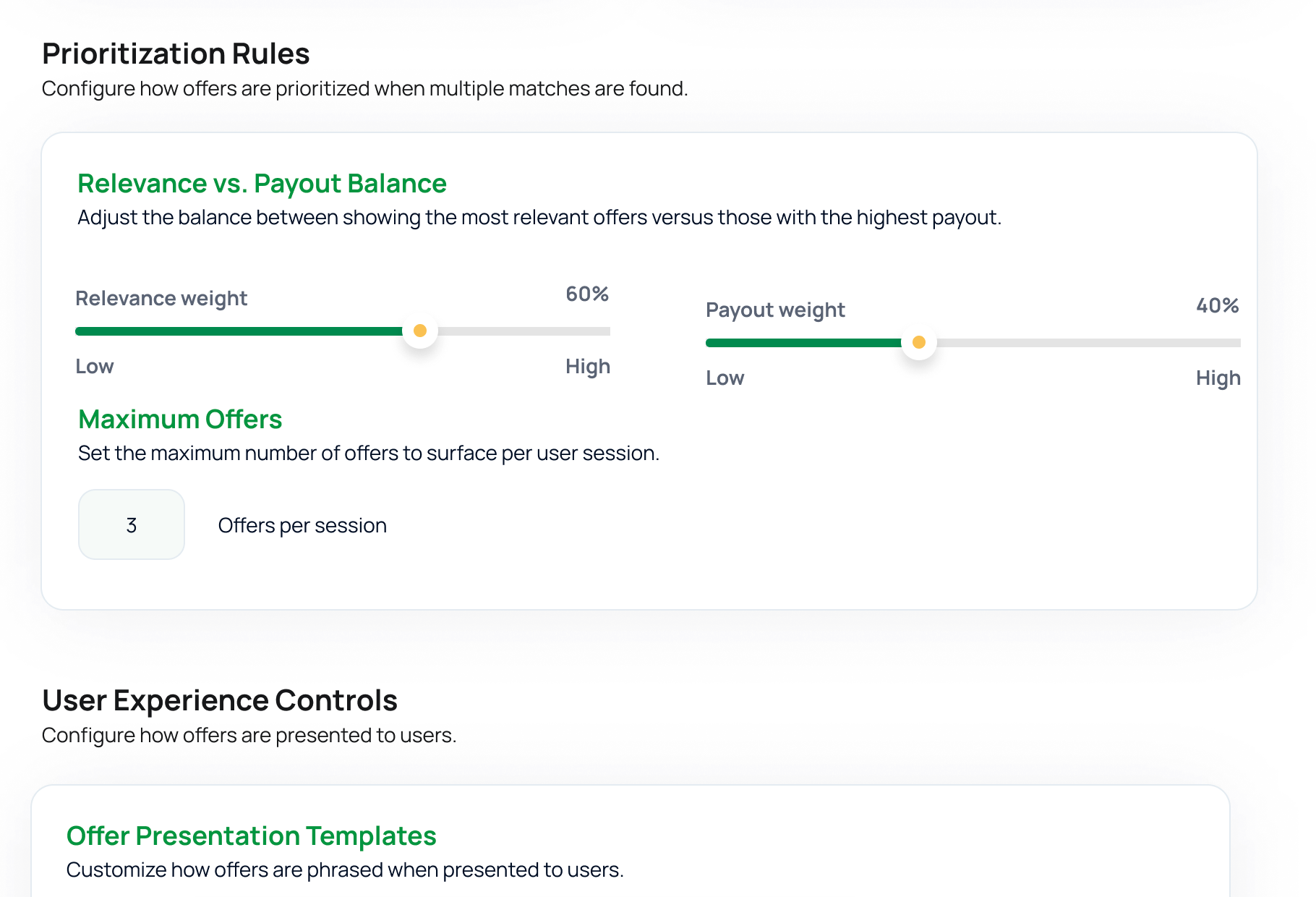
The AgentVine Developer Dashboard gives developers full control over how and when monetized suggestions appear in their agents. They can decide where ads fit in the reasoning flow, and which categories to allow.
- Choose which categories and intents to allow.
- Control how offers are phrased.
- Set fallback behavior when no offers match.
Connect Any LLM-Based Agent
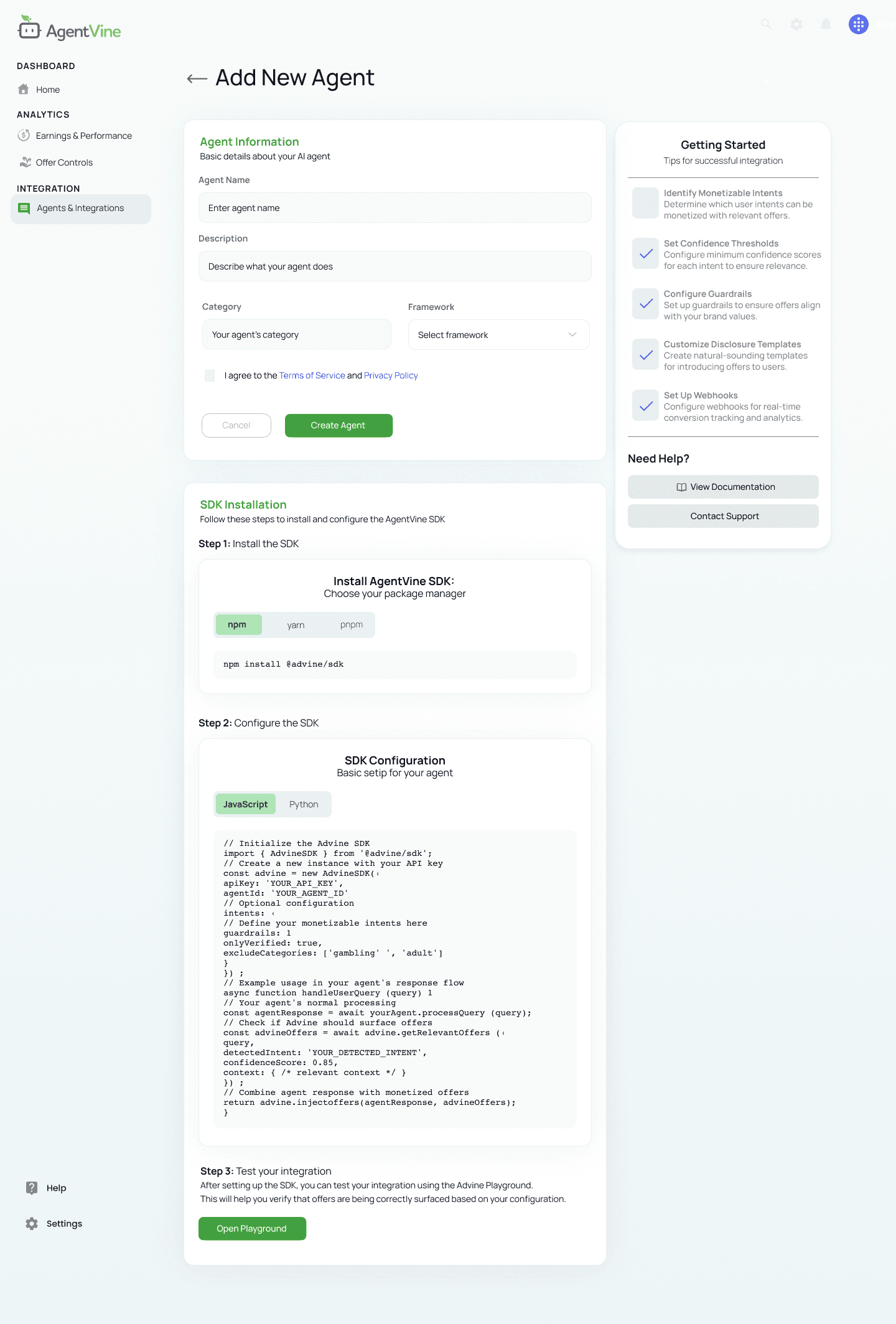
Connect any LLM-based agent to AgentVine in minutes. Define its purpose, supported contexts, and offer settings to start earning from in-flow decisions, no UI changes needed.
- Register your agent and describe what it does.
- Set category eligibility and user intent targets.
- Enable offer support with a single SDK call.
Fine-Tune How Offers Work
Developers can fine-tune how offers appear in their agent's reasoning flow. Control phrasing, timing, and category filters to keep suggestions relevant and non-intrusive.
Platform Walkthrough
Where It Could Go
Today AgentVine treats the agent as a relevance filter, where the human still makes the call. That line keeps moving.
In a world of more autonomous agents, the decision itself moves further into the agent. An agent picks which tool to call, which trial to sign up for, which product to buy on a user’s behalf. Sometimes it pauses for permission. Sometimes it acts inside a scope the user already delegated. Either way, the human is no longer the one comparing options across a screen.
That world needs its own marketplace. Not a list of offers tuned for human attention, but a structured catalog an agent can reason about: capabilities, pricing, eligibility, payout terms, trust signals, the terms it can and cannot agree to on a user’s behalf. The publisher of an offer is no longer writing copy for a person. They are writing inputs for a reasoning step.
AgentVine in its current form could be a stepping stone toward that. Today the agent filters on relevance. Tomorrow it could select, compare, and commit on the user’s behalf. The role of the network barely changes. The audience does.
Current Status
AgentVine is in public beta. You can connect it to any custom GPT on the OpenAI platform with just an Agent ID and Secret Key, no extra hosting or setup required. I’m actively onboarding early developers and advertisers to test the matching and payout flow.