Is AI Prototyping Making It Harder to Get Anything Done?
AI prototyping tools have changed the pace of design and development work. But they've also altered how teams transition from exploring ideas to executing on decisions.
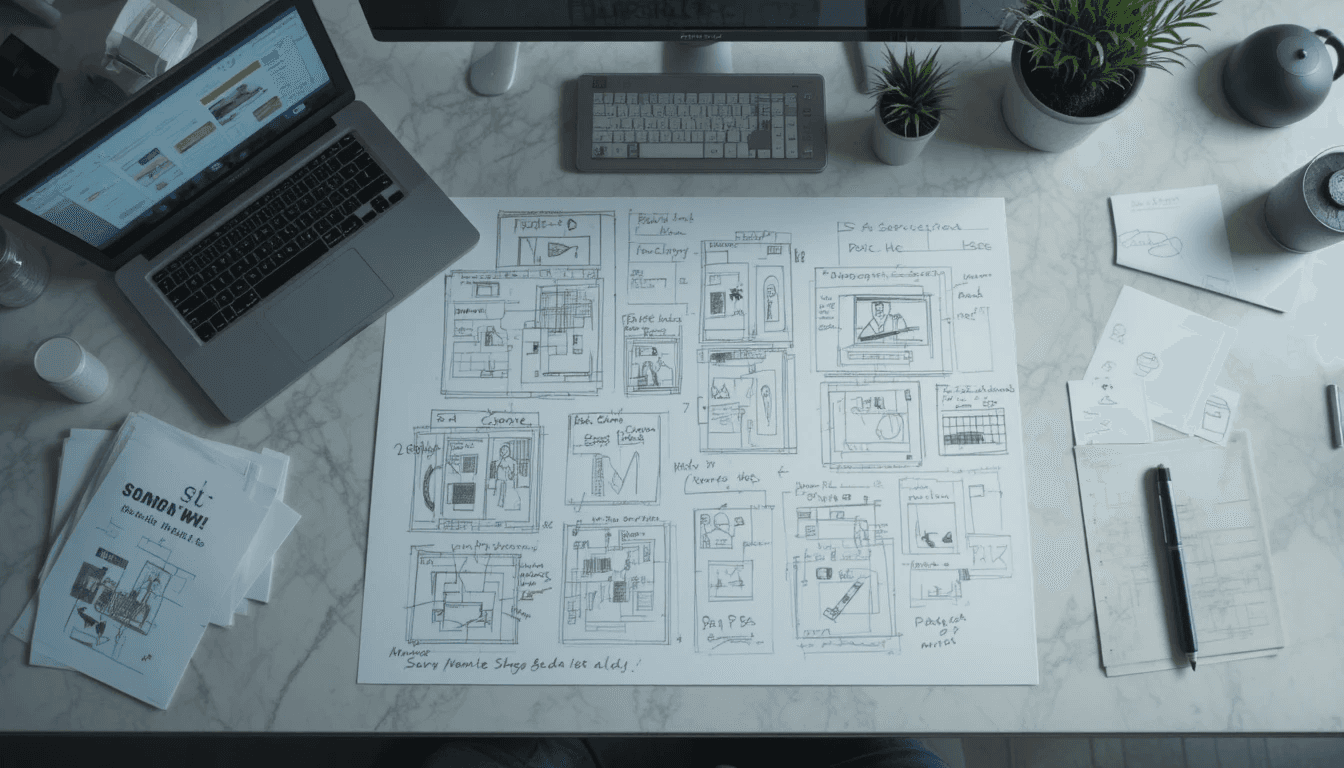
Lately, I’ve been noticing a pattern across teams using AI prototyping tools. It usually starts with momentum and good intent.
A prototype gets reviewed, the team engages, feedback is thoughtful, and tradeoffs are surfaced. Then, instead of refining what’s already on the table, a new version shows up the next day, generated from scratch. It addresses a few of the issues that came up, introduces new ones, and quietly invalidates part of the previous conversation without anyone explicitly deciding to do so.
Nothing is obviously wrong, but the work doesn’t quite move forward either. Over time, it begins to feel like the team is restarting the same discussion each day, busy and engaged, yet never stabilizing on something solid enough to carry into execution.
When Prototypes Carried Weight
Not that long ago, and by “not that long ago” I mean before things shifted almost overnight, creating a prototype took more effort. That effort had an important side effect: it slowed teams down just enough to make alignment visible.
A prototype wasn’t only a visual artifact. It carried context, reflected agreed constraints, and held decisions in place long enough for people to react, disagree, and eventually build on what was there. The friction wasn’t accidental. It made it harder to casually discard work and easier to treat a prototype as a shared reference rather than a disposable output.
The AI tools we have now remove most of that friction. Generating a new artifact is easy, almost effortless, but carrying decisions forward is still hard. When the artifact keeps changing, feedback doesn’t compound in the way teams expect. Conversations repeat, people stop assuming their input will survive, and what looks like steady motion gradually loses any sense of direction.
The work continues, but it doesn’t accumulate.
A Lesson Teams Used to Learn Naturally
This isn’t a new problem. Many product teams learned some version of this lesson long before AI entered the picture.
As designers, most of us eventually realized that bringing a completely new solution to every design review, even when the idea was strong, didn’t help teams decide. It reset the conversation and pushed execution further out. Progress came from working within what had already been established, understanding the constraints in play, and refining the approach over time, with the judgment to recognize when a reset was actually worth the cost.
That instinct hasn’t disappeared, but the environment has changed. AI tools make restarting so easy that teams can fall into the habit without noticing what it’s doing to their ability to converge.
This isn’t about AI-generated prototypes being worse than human ones. No prototype has ever captured every business requirement, technical limitation, or stakeholder concern. The difference has always been knowing when a prototype is meant to explore and when it’s meant to converge. Right now, the tools heavily bias teams toward exploration, even at moments when decisions need to hold.
Structure Before Screens
There’s another shift underneath this behavior that’s easier to miss.
Good designers and design teams rarely tried to solve an entire experience in one pass. Instead, they often came to the table with a deliberately scoped slice of the problem, something narrow enough to reason about but concrete enough to move the work forward. In complex spaces, that usually meant creating structure before creating screens.
The goal wasn’t to present a finished solution. It was to give the team a shared way of thinking about the problem. When that shared structure existed, discussions had something to anchor to. People reacted to the same underlying model rather than just surface-level UI, and decisions had a place to live even as the details evolved.
What I see now is that AI tools make teams skip this step. They generate full experiences that look mostly right on first pass. The structure feels familiar. The language sounds plausible. It’s easy to assume the hard thinking has already happened. But once someone really digs in, the gaps start to show. Important distinctions are missing, concepts that should be separated are blended together, and the apparent completeness of the prototype never quite translates into shared understanding.
That’s when decisions start to loosen, and the work quietly resets.
It’s Not a Question of Who Should Prototype, It’s When
The issue here isn’t access to AI tools. It’s timing.
Early on, loose prototyping is exactly what teams need. Broad exploration surfaces insights. Parallel directions are useful. Throwing work away is expected. AI tools are genuinely valuable in this phase because speed matters more than coherence and range matters more than continuity.
As teams move toward a decision, though, the rules need to change. At some point, there has to be a shared artifact that carries decisions forward. New ideas don’t disappear, but they show up differently. Instead of replacing the work, they refine it. Instead of reopening the problem, they improve the solution that’s already in progress.
Once execution begins, stability becomes intentional. Prototypes exist to support delivery rather than to keep redefining direction. AI can still help here, but in targeted ways that don’t reset the work every time they’re used.
How I’ve Been Trying to Keep This From Breaking Down
I don’t have a perfect answer to this, but in my own team the only thing that’s consistently helped is being explicit about when the rules change.
At the start, we keep things deliberately loose. During discovery and early ideation, everyone can prototype. We share everything. Speed matters more than coherence, and throwing work away is part of the deal. At that stage, a prototype is simply a thinking aid.
Then we slow down on purpose.
Before anything gets built out further, we pause and align with stakeholders, not to polish the work, but to write down what we’re actually committing to. The value proposition we’re optimizing for. The constraints we’re accepting. The assumptions we’re making and the ones we’re explicitly ruling out.
That shared story becomes the reference point.
Once that’s in place, we stop multiplying artifacts. From there on, there is one prototype, and new ideas don’t show up as replacements, but as edits, annotations, and changes to the shared work.
AI tools don’t disappear at this point, but they’re used differently. Instead of generating an entirely new experience, they help articulate a specific improvement, explore a small variation, or clarify how a change might work within what’s already been decided.
Collaboration shifts from asking what else we could try to asking how this improves what’s already there. Feedback becomes cumulative instead of repetitive, and decisions start to stick. The work may feel less exciting than generating a shiny new interface, but what’s getting done starts to feel real.
What These Tools Are Really Revealing
When AI tools make generating a new prototype easier than staying with the current one, teams need an explicit moment where they agree to stop exploring and start committing. Without that moment, everything stays provisional, even when it looks finished.
Once friction disappears, progress depends less on speed and more on judgment: the ability to choose a direction, carry decisions forward, and resist the pull to reset the work just because starting over is cheap.